Virtual Styling Service Available

 
How to Audit Your Closet in 4 Steps Before Buying a Single New Item

How to Audit Your Closet in 4 Steps Before Buying a Single New Item

How to Audit Your Closet in 4 Steps Before Buying a Single New Item

& Last updated on:

We've all stood in front of a closet overflowing with clothes and thought: "I have absolutely nothing to wear."

The instinctual reaction is to go shopping. We open an app or visit a mall to buy a new top or dynamic blazer, hoping it will magically unlock the rest of our wardrobe. But buying more clothes rarely solves a style crisis. Instead, it adds to the noise, clutters your space, and wastes money on items that don't fit your current lifestyle.

Before you spend a single rupee on new clothes, you need to perform a Wardrobe Audit. A closet audit isn't just about decluttering—it is a strategic analysis of what you own, why you wear what you wear, and where the functional gaps actually exist.

Follow this 4-step framework to transform your closet from a source of daily stress into a curated, functional styling suite.

If at any point if gets overwhelming for you can use my Wardrobe Audit Management Service here.

1. Step 1: The Total Evacuation & Harsh Sorting:Prerequisite:

Set aside 2 to 3 uninterrupted hours.

Empty your entire wardrobe—yes, every single piece—onto your bed or a clean hanging rack. Do not audit item-by-item while clothes remain on the hanger; taking them out breaks visual familiarity and forces a conscious decision for each piece.
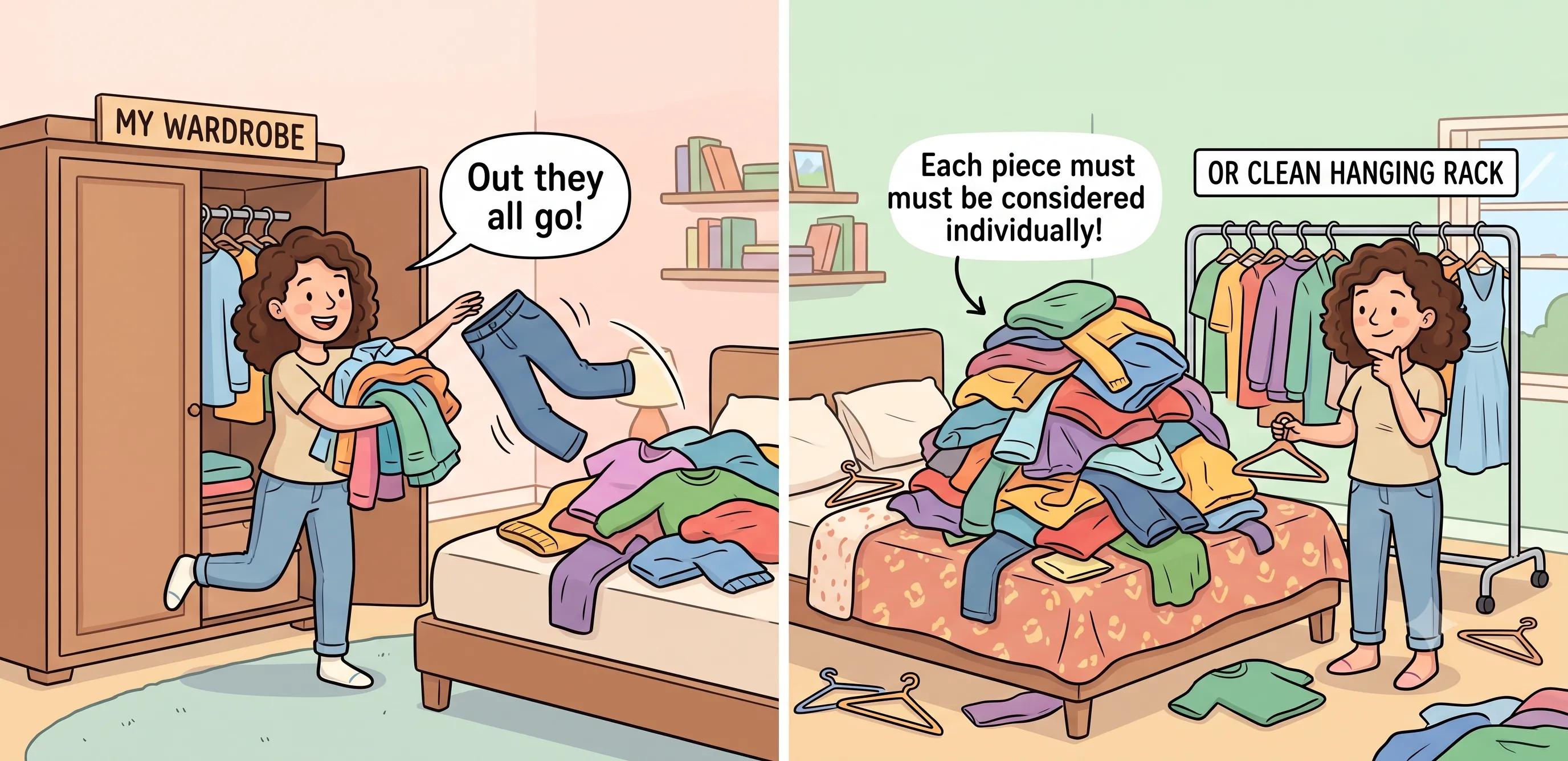
Step 1: The Total Evacuation & Harsh Sorting:Prerequisite

Sort every item into Four Non-Negotiable Piles:

  • Keep (The Core 20%): Items you have worn in the last 30 days that fit comfortably, suit your personal style, and make you feel confident.
  • Tailor / Repair: High-quality items that need hem adjustments, button replacements, or minor fitting. (Place these directly into a bag by your front door—if not taken to a tailor within 14 days, move them to donate).
  • Donate / Sell: Clothes that no longer fit your body shape, items associated with an old lifestyle, or pieces that haven't been touched in over 12 months.
  • The "Maybe" Box: Emotional or expensive pieces you hesitate to discard. Box them up, label with today's date, and store them out of sight. If you haven't opened the box in 6 months, donate it without looking inside.

2.Step 2: The Fitting & Reality Check:

Focus on your real life, not your hypothetical life.

Try on every single item in your Keep pile. Be radically honest about fit, comfort, and alignment with your current day-to-day routine.
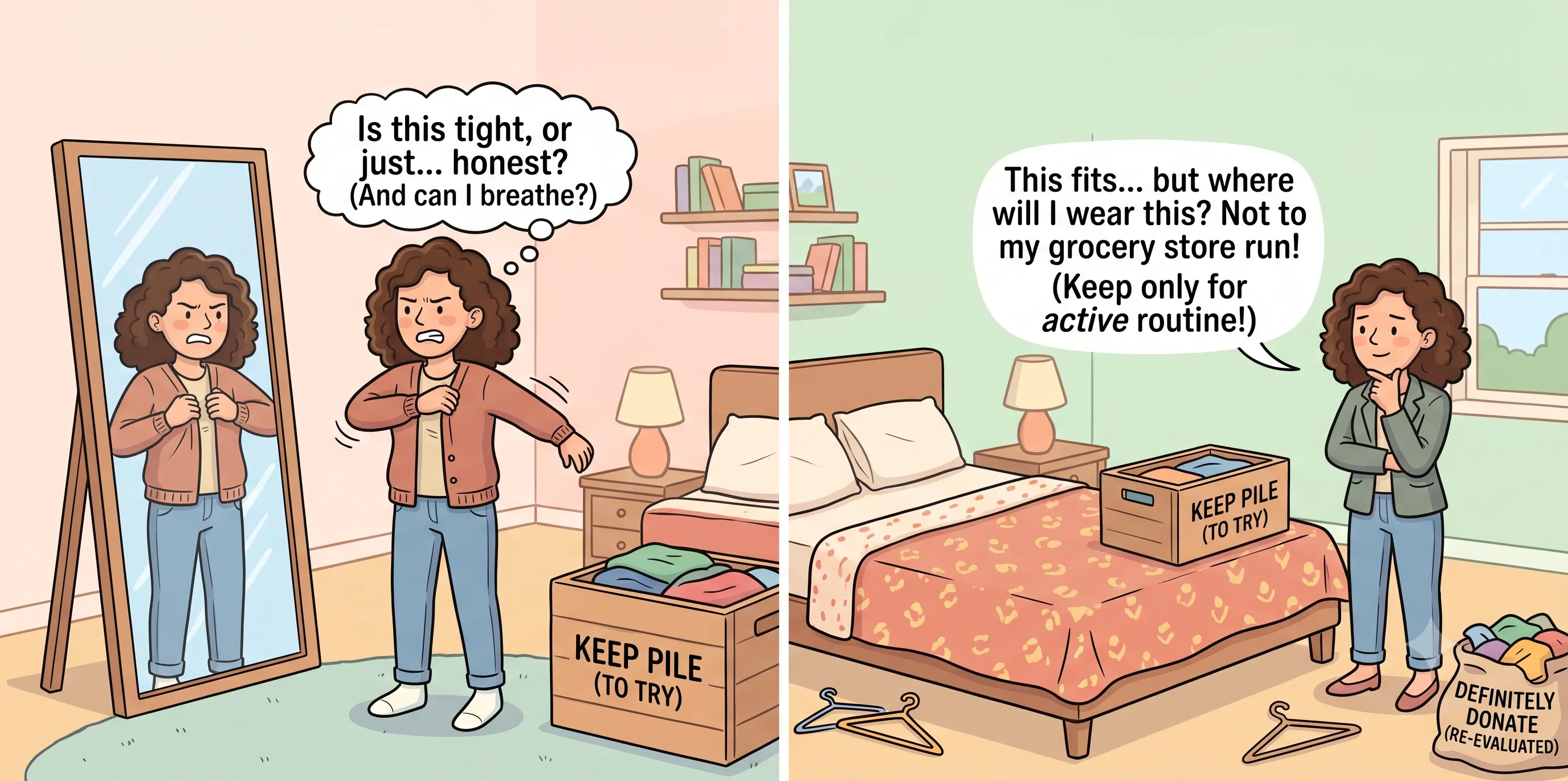
Ask yourself these three diagnostic questions:

  1. Does this fit my body as it is today? (Not 5 kg lighter or heavier).
  2. Does this fit my actual lifestyle? (If 70% of your week is spent in a corporate environment or client meetings, your closet shouldn't be 70% athleisure or evening wear).
  3. Is the fabric and cut working for my climate? (Ensure seasonal suitability for daily wear).
  4. Rule of Thumb: If an item requires uncomfortable posture, constant adjusting, or specific shapewear just to survive 2 hours, it does not belong in your daily wardrobe.

3.Step 3: Analyze Outfit Versatility & Color Harmony:

Test every remaining piece for mix-and-match capabilities.

Now that you are left with clothes that fit, it's time to test their structural integration into your overall closet architecture.
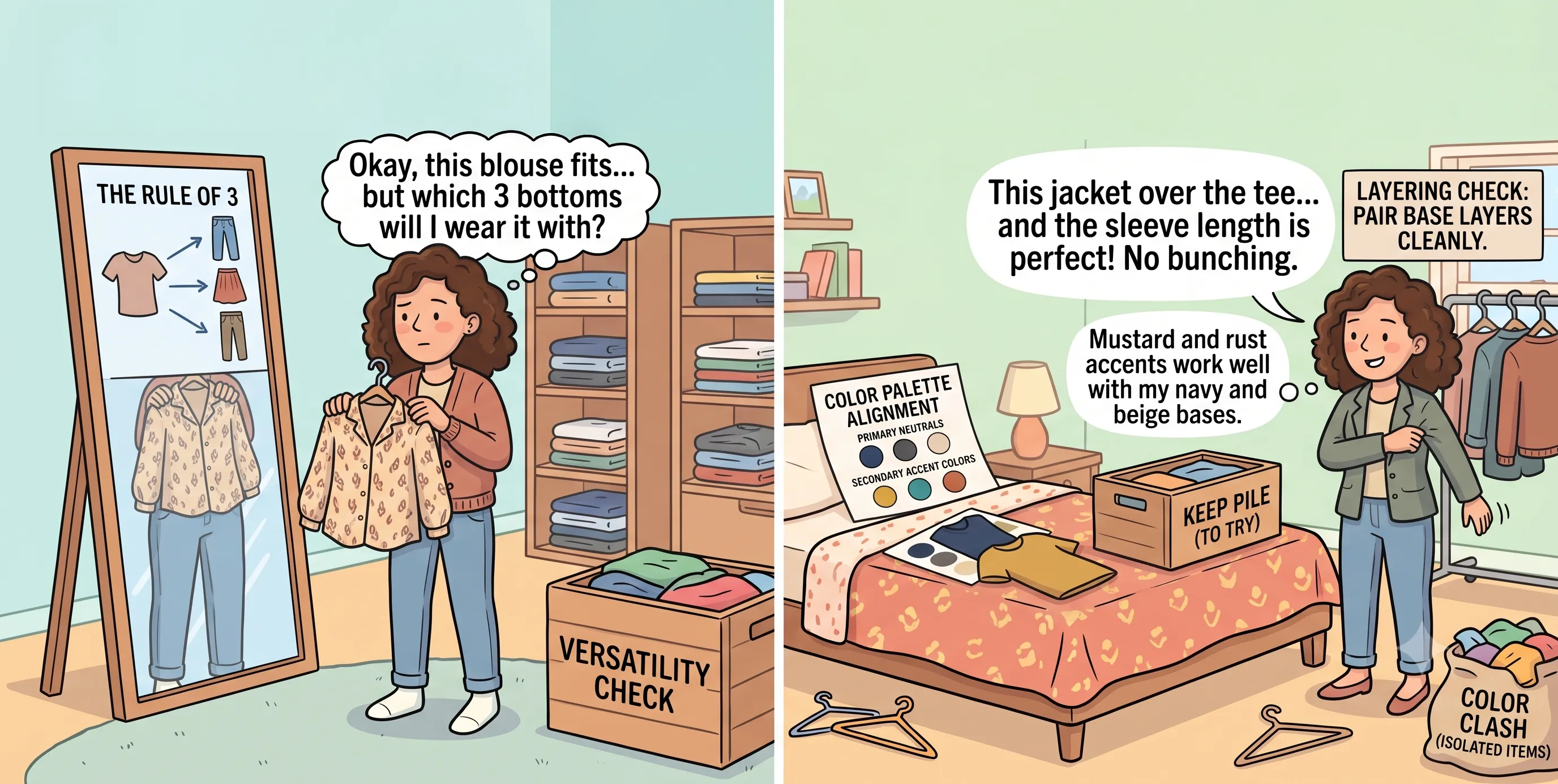
3.Step 3: Analyze Outfit Versatility & Color Harmony
  • The Rule of 3: Every top in your wardrobe must pair seamlessly with at least 3 existing bottoms (trousers, jeans, or skirts), and every bottom must pair with 3 different tops.
  • Color Palette Alignment: Identify your primary neutral bases (e.g., navy, charcoal, beige, black) and your secondary accent colors. Items that clash with your overall palette isolate themselves into single-use outfits Get a Professional Color Palette analysis.
  • Layering Check: Ensure your base layers (shirts, tees) pair cleanly under your outer layers (blazers, jackets, cardigans) without bunching or awkward sleeve lengths.

4.Step 4: Map Your 'Gap Analysis' & Shopping List:

Turn missing wardrobe links into an intentional purchase plan.

Instead of buying impulse items, your closet audit will reveal true functional gaps—the specific missing pieces preventing you from creating dozens of complete outfits.
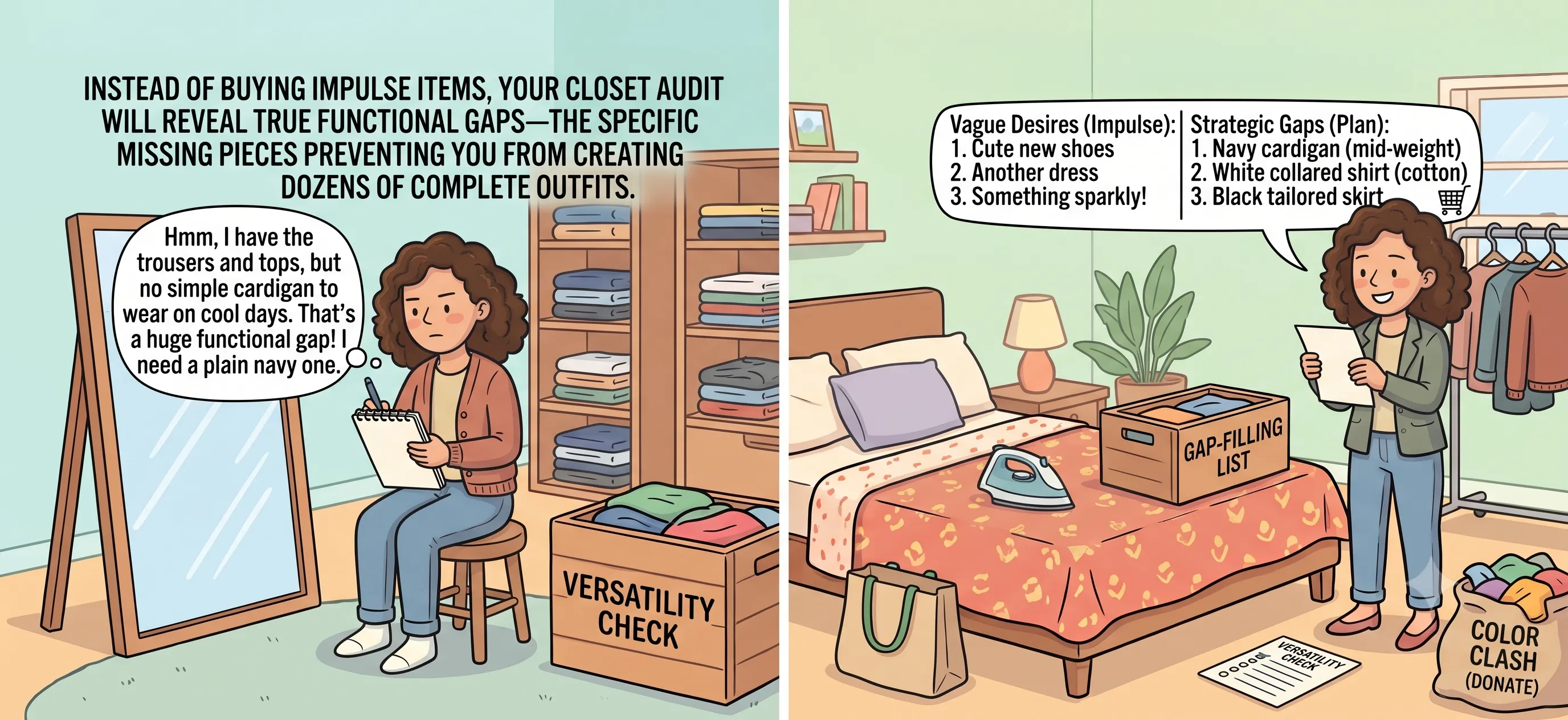
4.Step 4: Map Your ’Gap Analysis’ & Shopping List:

Write down precise, non-impulse requirements. Notice the difference between vague desires and strategic gap-filling:

  • ❌ Vague: "I need new tops for work."

  • ✅ Strategic: "I need a crisp, tailored white cotton shirt to bridge my navy blazer and charcoal trousers."

  • ❌ Vague: "I need shoes."

  • ✅ Strategic: "I need point-toe nude leather flats that work for both business casual and weekend denim."

The True Cost-Per-Wear (CPW) Formula

Before adding any newly identified item to your target shopping list, evaluate its long-term financial return using the Cost-Per-Wear metric:
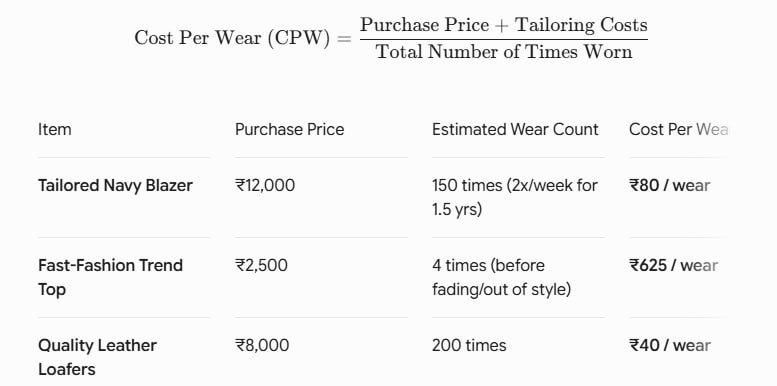
The True Cost-Per-Wear (CPW) Formula Before adding any newly identified item to your target shopping list, evaluate its long-term financial return using the

An expensive, high-quality classic item almost always delivers a drastically lower CPW than cheap impulse buys that sit unworn.

What to Do Next

Once your closet audit is complete, organize your remaining items by category and color gradient (e.g., light-to-dark jackets, work shirts, trousers). Hanging your clothes on uniform, velvet, or wooden hangers instantly elevates visibility and makes morning styling effortless.

By auditing your wardrobe twice a year, you transition from reactive, impulse shopping to an intentional, high-value personal style strategy.


Book a Discovery Call Call Us