Virtual Styling Service Available

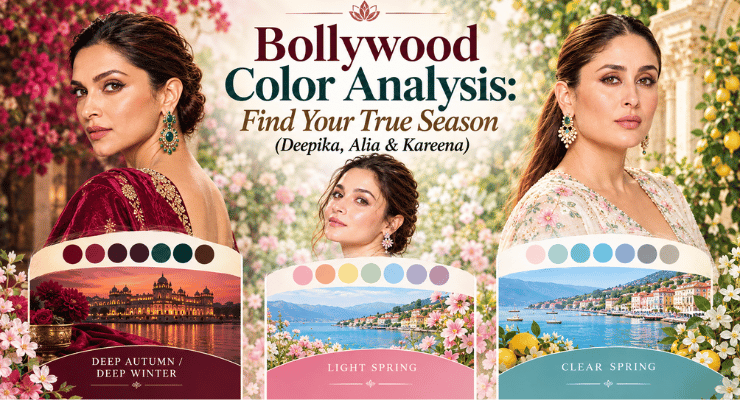
We have all been there: you spot a stunning pastel peach or beige outfit worn by a celebrity on Instagram, rush to buy something similar for a family wedding or festive event, only to look in the mirror and feel tired, pale, or completely flat.
The issue isn't your skin, your makeup, or your lighting. It is Color Theory.
In traditional Indian styling, there has long been a lazy generalization: "All Indian skin tones are warm and golden, so just wear bright red, gold, or warm pastels."
In professional image consulting, that myth falls apart immediately. Indian complexions span a rich, nuanced spectrum—from cool-toned dusky and neutral olive to delicate ivory with cool pink undertones.
When you understand your Seasonal Color Analysis, dressing becomes effortless. Let's decode how color seasons work for Indian skin tones through the lens of Bollywood's most stylish icons—and how you can identify your own flattering shades.

Seasonal color analysis divides human coloring into four primary palettes based on three dimensions:
Temperature: Warm vs. Cool
Value: Light vs. Deep
Chroma: Clear/Bright vs. Muted/Soft
A common trap in India is confusing overtone (the surface depth of your skin—fair, wheatish, dusky) with your undertone (the subtle hue beneath the surface—cool blue/red, warm yellow/peach, or neutral olive).
You can be dusky with a striking cool undertone, or fair with a warm peachy undertone. Matching fabrics to your overtone instead of your undertone is why certain "safe" colors drain your natural vitality.
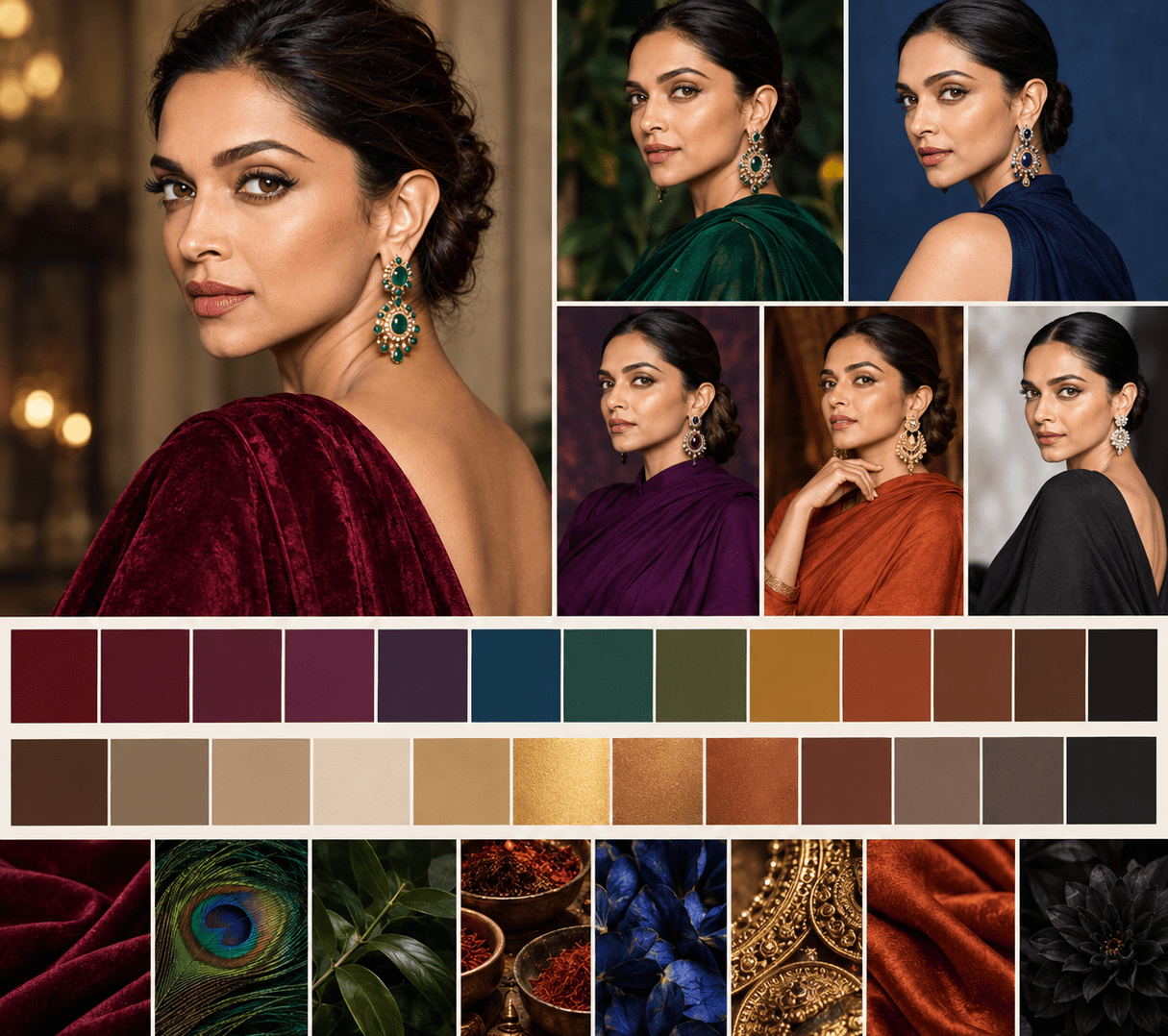
Deepika possesses rich, high-contrast coloring: dark eyes, deep hair, and an olive-to-dusky complexion with substantial depth.
The Shades That Make Her Shine: Deep, saturated jewel tones. Rich emerald green, royal sapphire, ruby red, oxblood, and true black create a striking frame for her features.
The Shades That Wash Her Out: Pale, dusty pastels (like washed-out baby pink or chalky beige). When she wears extremely light, desaturated hues without strong lip contrast, her natural warmth gets swallowed up.
Your Takeaway: If you have dark eyes, dark hair, and medium-to-deep skin with medium-to-high contrast, you thrive in deep, grounded, and saturated palettes. Skip chalky pastels in favor of rich jewel tones.
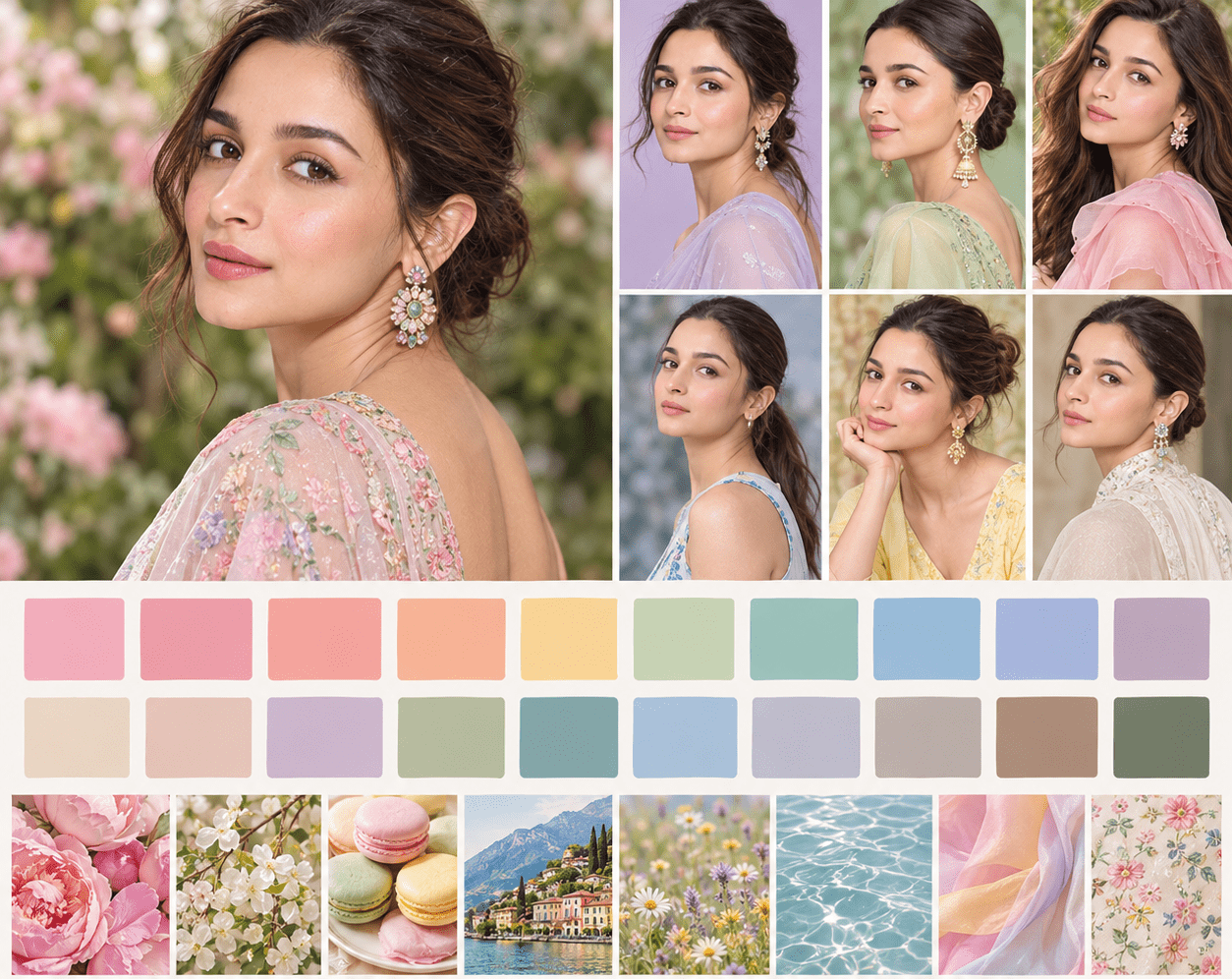
Alia represents a lower-contrast profile. Her features are softer, with lighter eye clarity and delicate warmth or cool-neutral undertones that easily get overpowered by harsh colors.
The Shades That Make Her Shine: Soft sorbet shades, powder blue, sage green, blush pink, and creamy off-white. Her viral ivory wedding saree succeeded because the soft, warm-neutral tone complemented her natural lightness rather than competing with it.
The Shades That Overwhelm Her: Neon shades, aggressive electric blues, and heavy, jet-black velvet. These severe, hyper-saturated shades walk into the room before she does.
Your Takeaway: If your natural contrast between hair, eyes, and skin is low and delicate, avoid jarring, stark contrasts. Your strength lies in tonal harmony, gentle prints, and muted or soft-clear shades.
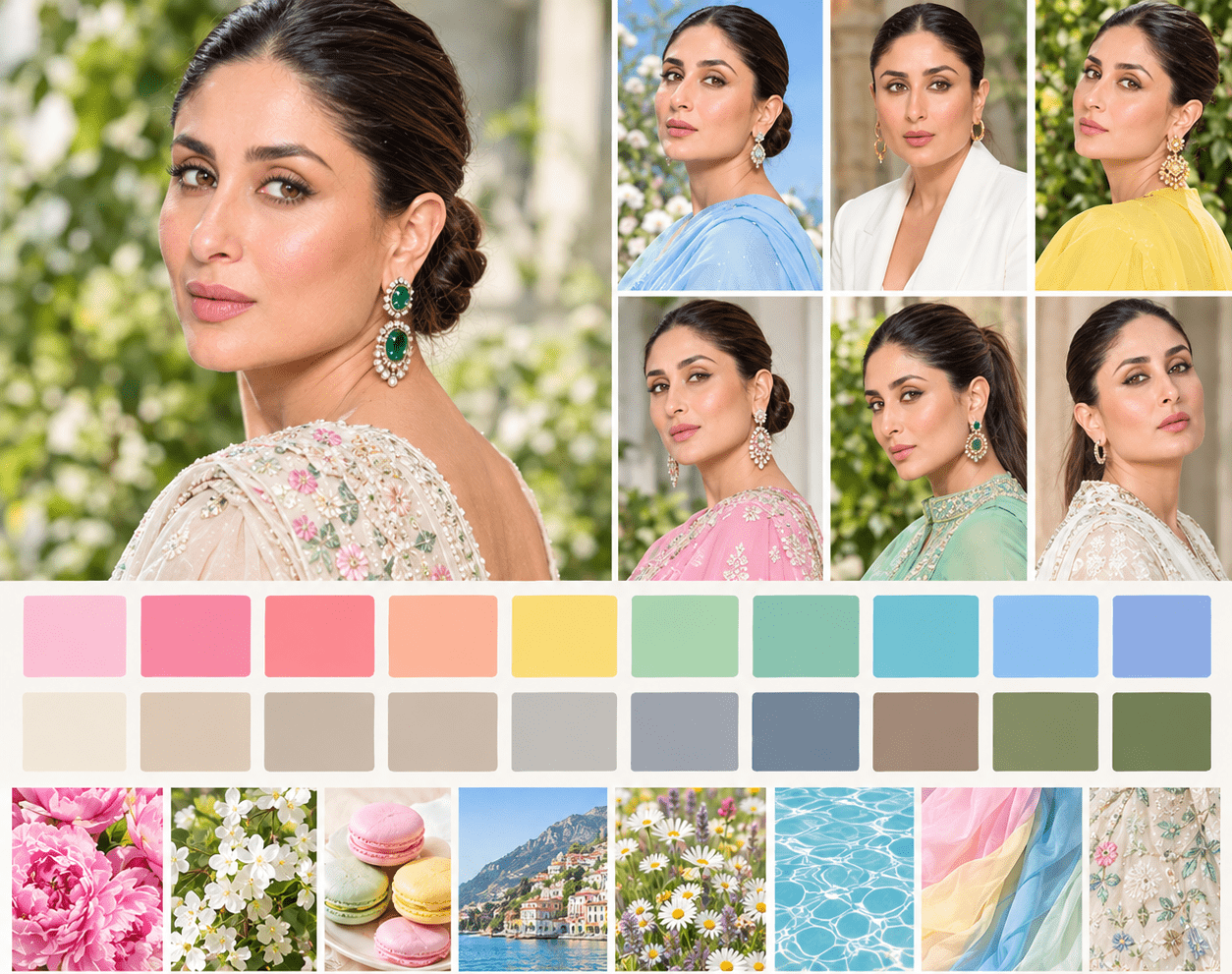
Kareena has high radiance and clear contrast. Her skin has luminosity that can handle vibrant, clean colors that would look garish on someone with muted coloring.
The Shades That Make Her Shine: Bright coral, sunflower yellow, poppy red, and sharp metallics. She carries off vibrant tones effortlessly because her natural coloring has clarity rather than muteness.
The Shades That Flatter Least: Muddy earth tones, drab taupe, and dull mustard. Muted shades diminish her signature vibrancy.
Your Takeaway: If your skin has clear, vibrant warmth with expressive eye contrast, lean into pure, decisive colors. Leave dull, dusty tones behind.
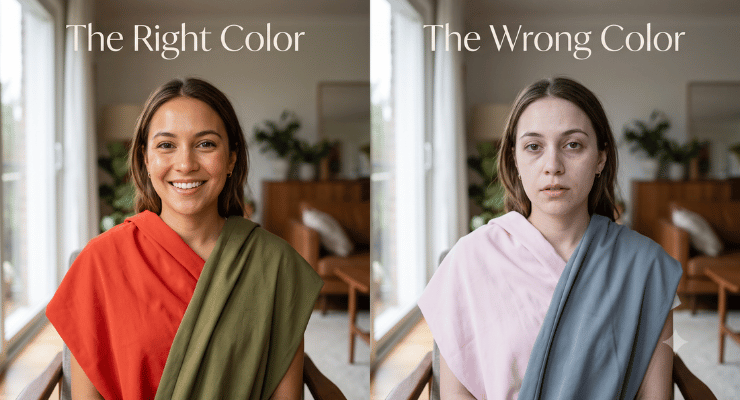
While a professional 12-season draping consultation is the only way to pinpoint your precise seasonal subtype, you can test your baseline temperature with three simple steps:
The White Sheet Test: Hold a sheet of pure stark white printer paper against your bare face in natural daylight. Does your skin look distinctly golden/yellowish next to it (leaning Warm), or does it look rosy/olive/ashy (leaning Cool or Olive)?
The Metallic Test: Place a piece of bright yellow gold fabric (or jewelry) next to one side of your face, and polished silver on the other. Look at your undereye circles and jawline. Does gold smooth out your complexion, or does silver give your skin a healthy, awake glow?
The Contrast Evaluation: Look at a black-and-white selfie of yourself. Is there a stark black-to-white contrast between your hair, eyes, and skin, or is everything a harmonious blend of mid-tone grays? Higher contrast handles bolder palettes; lower contrast requires softer transitions.
The Practical Shortcut: Your Palette Comparison
|
Seasonal Family |
Key Characteristics |
Signature Celebrities |
Power Colors to Wear |
Colors to Avoid |
|
Deep (Autumn / Winter) |
High depth, dark eyes/hair, olive or dusky undertone |
Deepika Padukone, Bipasha Basu |
Emerald, Ruby, Royal Navy, Aubergine |
Pale chalky pastels, dusty beige |
|
Soft (Summer / Autumn) |
Low-to-medium contrast, gentle features, muted undertone |
Alia Bhatt, Sonam Kapoor (casual looks) |
Dusty rose, Sage green, Powder blue, Soft ivory |
Neon orange, stark jet black |
|
Warm (Spring / True Autumn) |
Golden/peachy undertone, radiant warmth |
Priyanka Chopra, Madhuri Dixit |
Terracotta, Warm mustard, Coral, Olive green |
Icy blue, stark silver, cold magenta |
|
Cool (True Winter / Cool Summer) |
Blue, pink, or cool olive undertone, sharp contrast |
Aishwarya Rai, Katrina Kaif |
Pine green, Pure crimson, Cobalt blue, Icy white |
Warm rust, muddy camel, orange |

Stop Guessing What to Wear—Discover Your Exact Palette
Buying outfits based on mannequins or red carpet photos often leads to a wardrobe full of clothes you never wear. Dressing with impact isn't about chasing trends; it's about choosing silhouettes, fabrics, and colors scientifically aligned with your natural architecture.
At Image Redefined, our personalized Color Analysis & Personal Styling Sessions use precise physical fabric drapes to reveal:
Step into your most confident self this festive season.
Book Your Personal Color Consultation with Image Redefined Today